

Principle: How to Coach Fight
I finished reading John Wooden’s *Pyramid of Success* this week.
Wooden joined the Navy in 1943. Spent three years as a physical trainer for combat pilots during World War II. A man who understood, in a very literal sense, what it meant to prepare people for high-stakes performance.
And yet the philosophy he built wasn’t about aggression. It wasn’t about defeating the opponent.
At the very top of his Pyramid sits Competitive Greatness. His definition: “Having a real love for the hard battle, knowing it offers the opportunity to be at your best when your best is required.”
Not winning. Not defeating. A love for the hard battle.
I’ll be honest with you. I am not a natural fighter. Whether in business, on the field, or in my relationships, competition doesn’t come easily to me. It’s one of the things I’m actively working on. I’ve always been surrounded by fighters, so I know what it looks like and I admire it in others.
Wooden’s definition changed something for me. Because fighting on those terms is something I can learn. And I think most coaches can.
Perspective: The Kind of Fight Coaches Avoid
A lot of coaches confuse fighting with confrontation.
They think being a fighter means being the loudest or most forceful person in the room. Because that doesn’t feel like them, they decide they’re not fighters at all.
You might think the coaches who struggle to fight are the ones who lack confidence. In my experience, they’re usually the ones who care the most. They know what’s at stake. They feel the risk clearly. And that’s precisely why they pull back at the moment presence is most needed.
Real competitive fight doesn’t look like aggression. It looks like submitting the proposal when you’re not sure it’s ready. Having the conversation you’ve been avoiding for three weeks. Staying in the room when the room gets uncomfortable. Holding your standard when someone with more authority pushes back.
None of that requires a personality transplant. All of it requires a choice.
Wooden’s insight is that fighting is a skill, not a temperament. It can be taught. It can be built. And it starts with learning to respect the hard battle rather than hoping it passes.
Story: How Wooden Coached Fight
Wooden almost never mentioned the other team.
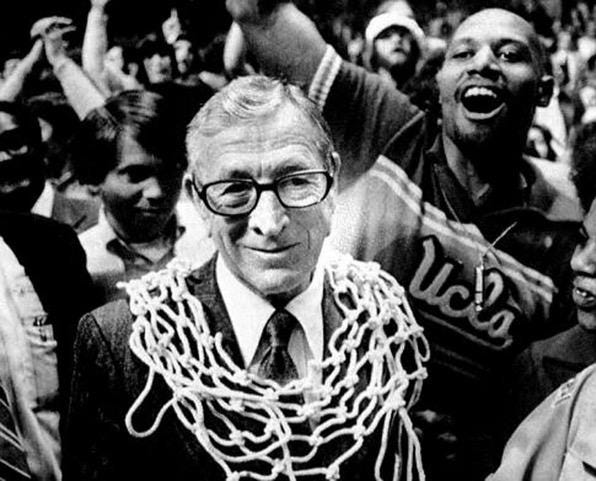
In 27 seasons at UCLA, ten national championships, his pre-game speeches weren’t about the opponent’s weaknesses. There were no scouting reports dominating practice. The other team was largely irrelevant to his preparation.
What he talked about was being at your best when your best was required.
His practices were, by every account, the hardest thing his players ever did. Not games. Practices. Bill Walton described them as relentless. Wooden engineered an environment where the fight happened every single day, long before anyone showed up to watch.
By the time UCLA reached a final, the players had already been in harder battles that week.
That’s the coaching insight worth keeping. Wooden didn’t motivate players to fight in big moments. He built an environment that made fighting a daily habit. The championship moments were easy by comparison.
Question
Describe a time in your life when you fought a good fight but came in second.
How were you a winner in that situation?
Closing Thought
Wooden won ten championships and barely mentioned the opponent.
The fight he was preparing his players for was always against themselves. Their own complacency, their preference for comfort, their willingness to give less than their best when no one was watching.
That’s the fight worth coaching.
Until next week,
Caleb Cousens
Join the Advantage community — the home for serious performance practitioners: advantage.community
Steve House also said- You can’t coach desire, and no matter how fancy your training plan or how high your stated goals are, it comes down to getting out the door and doing the work day after day.
After all it all boils down to how badly do you want it, how badly do you want to prepare for it so that you can't falter on the game day or race day or be it anything. These kind of things mostly comes from internal self. It can be coached but to a limited extent.
All the raging fire has to come from within the belly to perform at their best and be relentless with not letting the guard down on effort allocation. One has to be fully BOLD.