

Principle: Clarity Over Volume
As coaches, our goal isn’t to download our knowledge into our players. It’s to help them see clearly, decide faster, and act with confidence. We must fundamentally shift our perspective from that of an instructor to that of a facilitator. Our ultimate goal is not merely to download our accumulated knowledge, strategies, and experience into our players, but rather to cultivate an environment where they can grow into autonomous, high-performing individuals.
That requires restraint, intention, and empathy.
This philosophy can be summarized by two governing principles:
Clarity builds trust. When a coach communicates simply, honestly, and consistently, it creates a predictable and safe environment. Players trust the system, trust their preparation, and most importantly, trust the coach who provides a steady hand.
Noise creates distance. Over-coaching, confusing instructions, constant criticism, or emotional volatility introduces friction and uncertainty. This noise pushes players away, making them rely on external validation rather than their internal judgment.
Ultimately, the measure of a coach is not their personal expertise or eloquence. The true sign of elite coaching is the impact on the athletes.
Perspective: Knowledge Isn’t Value Until It’s Useful
I’ve seen it many times. A coach enters a new environment, feels the pressure to prove their worth, and responds by talking. A lot.
They run long meetings. They deliver “workshops” that feel more like university lectures. They explain everything, except what actually matters right now.
This often comes from insecurity. Sometimes it’s internal. Sometimes it’s driven by management expectations. With coach turnover at an all-time high, it’s understandable that coaches feel the need to make an immediate impression.
But rambling is not leadership and information overload is not impact. As Luis Enrique puts it, great coaches communicate efficiently, finding fast, memorable ways to get their point across. That matters even more now, with a generation of athletes raised on short-form, high-signal content.
Story: Phil Jackson and the One-Word Timeout
Phil Jackson coached some of the most talented teams in NBA history — Michael Jordan’s Bulls and Kobe Bryant’s Lakers. He could have filled timeouts with tactics, diagrams, and speeches.
Often, he didn’t. Former players have repeatedly shared that Jackson would sometimes call a timeout, look at the group, and say one sentence, or even one word.
“Breathe.”
“Trust.”
“Patience.”
Then he’d send them back out.
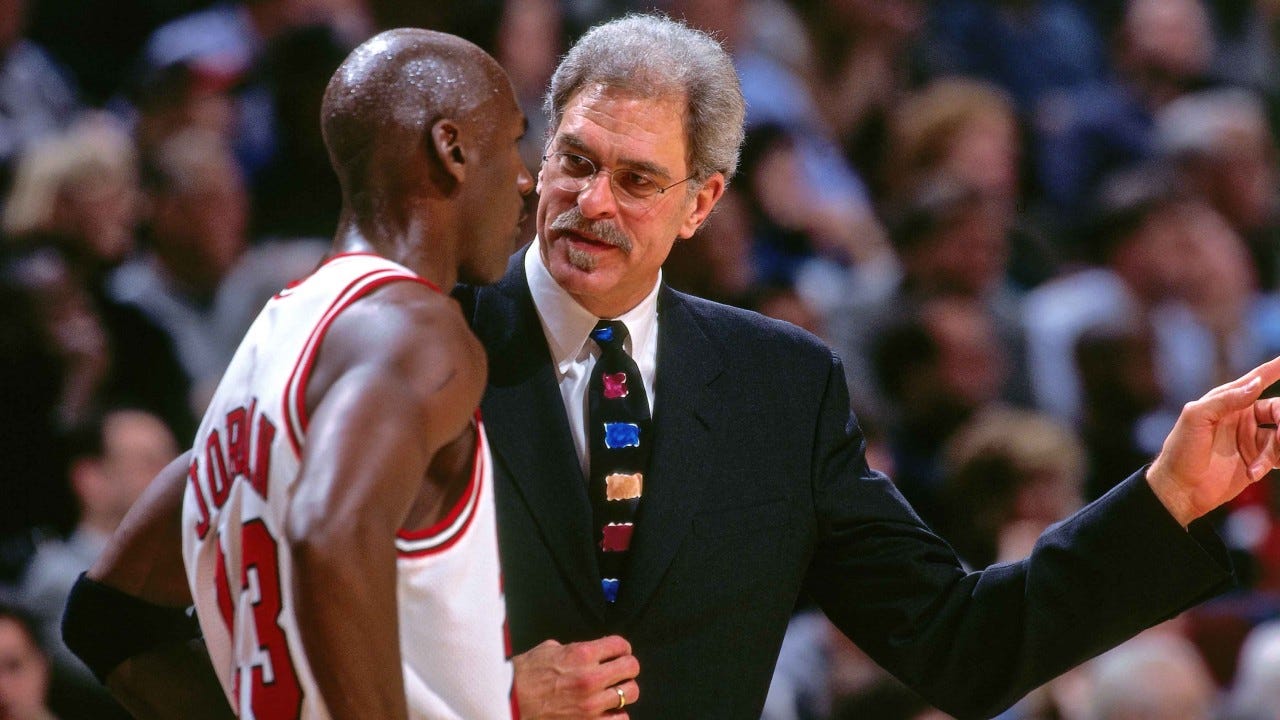
To outsiders, it looked almost negligent. To players, it was grounding.
Jackson understood something many coaches miss: in high-pressure moments, players need clarity. They need emotional regulation. They need a simple anchor they can carry back onto the court.
He trusted that the work had already been done. His job in the moment wasn’t to teach, it was to steady.
That restraint didn’t diminish his authority, when Phil Jackson spoke, players listened — precisely because he didn’t always speak.
Question:
If your players could only remember one thing from you today, would you know what it is?
Closing Thought
Coaching is about being understood. When communication is clear, players feel confident. When it’s efficient, they feel trusted.
Our goal as coaches should be to say less and mean more.
Until next week,
Caleb Cousens